Imposed conciliation does not reconcile
24 Feb 2025, 16:09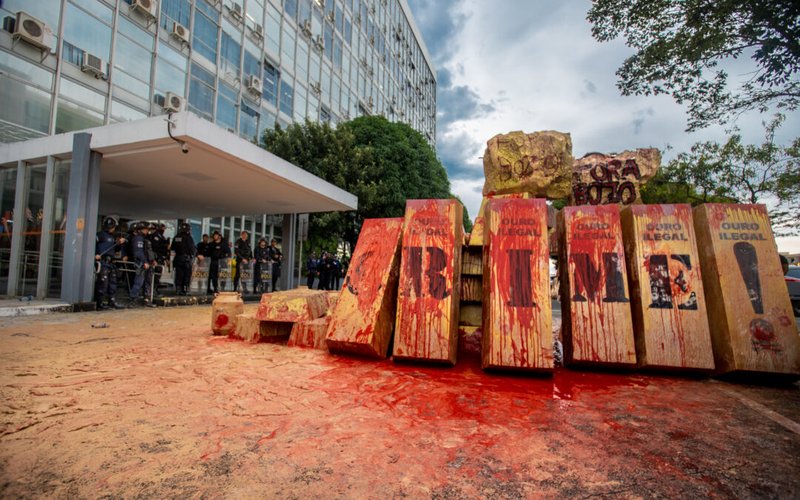 Foto: Ana Mendes
PN #72
The Arns Commission expresses its concern about the direction that the Conciliation Chamber created by Justice Gilmar Mendes is taking in its final phase of deliberations. It was established in the context of actions questioning the constitutionality of Law No. 14,701/23, which reintroduced the time frame thesis to hinder the protection of indigenous lands, contrary to previous decision by the Federal Supreme Court.
Under the pretext of overcoming violence on indigenous lands, the Conciliation Chamber reopened debates on the safeguarding of original rights [indigenous peoples' rights], creating legal uncertainty, fueling excessive ambitions, and arousing hostilities that, in practice, endanger the physical and cultural survival of many of these peoples. In our opinion, the Chamber seems to be on the wrong track.
1 - The judicial initiative to establish a political space for negotiating fundamental rights that cannot be waived was surrounded by criticism. Its asymmetrical composition has accentuated old power imbalances. Its atypical functioning caused perplexity among jurists. Equitable conditions for participation indicated by international law were not observed.
2 - The point of view of indigenous representation was not considered, forcing the Articulation of Indigenous Peoples of Brazil to leave the negotiating table. Even so, bargaining over the fundamental rights of others went ahead, and the supposed conciliation took on the increasingly imposing appearance of a secret meeting.
Conflicts cannot be resolved unless the most affected party consents and participates. Conciliation with no legitimate parties involved is unconstitutional. It is the responsibility of the STF to protect fundamental rights, not to harbor transactions that violate them. This extravagant forum for political dispute that has been established within the STF has neither the competence nor the legitimacy to propose any regulatory changes.
3 - Despite this insurmountable barrier, such forum engendered a legislative proposal to alter the demarcation rules, responding to demands from large groups of interest, in a serious threat to the traditional way of life. It also raised the possibility of removing indigenous peoples from their lands, contrary to § 5 of art. 231 of the Federal Constitution.
4 - Let us note that even a “jabuti”¹ appeared in the text of the preliminary draft bill, to the surprise of the remaining participants in this tumultuous process.
Such draft sparked further controversy by seeking to allow economic activities on indigenous lands, including mineral research and exploration, which could impact the protection of forests and the survival of their inhabitants. It did not even bother to safeguard the protection of isolated and recently contacted indigenous peoples, exposing them to serious dangers by simply ignoring their existence.
5 - There is significant national interest in protecting the guardians of our forests, historically plundered, against the greed of parliamentary majorities of the moment.
--
¹ The expression « a jabuti appeared in the text » means the insertion of extraneous content, unrelated to the main theme, in a bill, provisional measure or other type of legal text. It is an analogy to the Brazilian popular saying “jabuti não sobe em árvore” (tortoises don’t climb trees), used to express facts that do not happen naturally.