


Lowering the age of criminal responsibility has nothing to do with public safety
24 Aug 2026, 11:04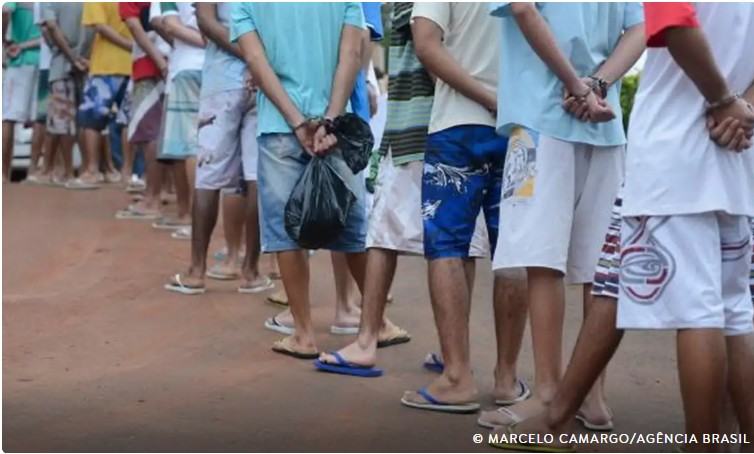 Foto: Marcelo Camargo/Agência Brasil
Children and adolescents were recognized by Brazil’s 1988 Federal Constitution as rights-bearing individuals and as persons in a particular stage of development. For this reason, Brazil’s legal system established a specific framework for holding adolescents who commit offenses accountable, providing for socio-educational measures under the Statute of the Child and Adolescent (ECA), as regulated by the National Socio-Educational Assistance System (Sinase). Above all, the age of criminal responsibility at 18 is a constitutionally entrenched provision that cannot even be subject to amendment.
Contrary to what is often conveyed to the public, adolescents are indeed held accountable for their conduct, including through deprivation of liberty in juvenile detention facilities. There is no impunity. Rather, there is a differentiated form of sanction, taking into account the fact that this population is still undergoing a process of maturation. The debate over the age of criminal responsibility, therefore, should not be based on the false premise that adolescents are not held accountable, but rather on the need to seek effective responses capable of protecting society and reducing violence.
According to available data, however, violence does not include adolescents among its main perpetrators. The proportion of young people subject to socio-educational measures is extremely small compared with the number of adults in prison — around 2%. According to Sinase 2024, among these 2%, the offenses that most frequently lead to restrictions or deprivation of liberty are robbery (31.7%) and drug trafficking (27%). Homicide accounts for only 12.6%, equivalent to approximately 0.2% of all crime.
Regarding drug trafficking, a recurring argument used to portray adolescents as becoming involved in the criminal world, Convention No. 182 of the International Labour Organization (ILO) classifies the involvement of children and adolescents in drug trafficking as one of the worst forms of child labor.
It is therefore clear that lowering the age of criminal responsibility has no connection to public safety and is not grounded in a sound criminal justice policy. Instead, it relies on mere symbolism for political purposes. By endorsing such a maneuver, the National Congress would evade its constitutional responsibilities and work against public security, contradicting the reality of the country and disregarding the suffering of a population that so strongly demands — and deserves — genuine safety.
This analysis has been turned upside down. Adolescents are not among those primarily responsible for violence in Brazil. Rather, they are one of the groups most vulnerable to lethal violence, particularly Black adolescents and those living in marginalized communities. Public policies must be formulated in light of this reality, which is exposed daily in the news, rather than on mistaken perceptions about the role of young people in the dynamics of violence.
International experience also shows that early incarceration does not reduce crime. UNICEF, the United Nations Committee on the Rights of the Child, and the Inter-American Commission on Human Rights advocate for states to adopt specialized juvenile justice systems that take into account the particular developmental circumstances of children and adolescents, prioritizing socio-educational measures, social reintegration, and the prevention of reoffending.
To address Brazil’s need for effective public security policies, it is essential to consider the consequences of subjecting adolescents to a prison system with a long-standing record of overcrowding, institutional violence, and inadequate rehabilitation policies. Approximately 500 deaths occur each year due to conditions associated with the poor living conditions within the prison system.
Combating violence requires evidence-based measures supported by policies that strengthen quality public education, social protection, mental health services, culture, sports, and opportunities for productive participation in society. It also requires improving the socio-educational system, with a focus on accountability, reparation, and social reintegration.
It is both legitimate and beneficial for civil society and Congress to discuss improvements to the ECA, provided that such discussions remain grounded in the effective implementation of the legal institutions governing this issue.
National Conference of Bishops of Brazil (CNBB)
Brazilian Press Association (ABI)
Dom Paulo Evaristo Arns Commission for the Defense of Human Rights
Brazilian Public Security Forum (FBSP)
Vladimir Herzog Institute (IVH)
Brazilian Institute of Criminal Sciences (IBCCRIM)
Brazilian Bar Association — São Paulo Section (OAB-SP)
Article originally published in Folha de S. Paulo on July 12, 2026.